
What Counts as ‘Certified’ Translation of Documents? A Compliance Guide for Businesses
For official entities, certified translation is not optional; to ensure documents are accepted and avoid unnecessary delays or additional costs, it is essential to use a properly certified translation that meets the relevant requirements. HR teams, law firms, in-house counsel, and legal operations teams in the U.S. sometimes search for “certified translation of documents” for employee documents translation that may meet the qualifications of USCIS, courts, or other official and government entities.
In this article, we will explain what certified translation is, why it matters, the different types of certifications and authentication, and the standards your translation vendor should meet
What Is Certified Translation?
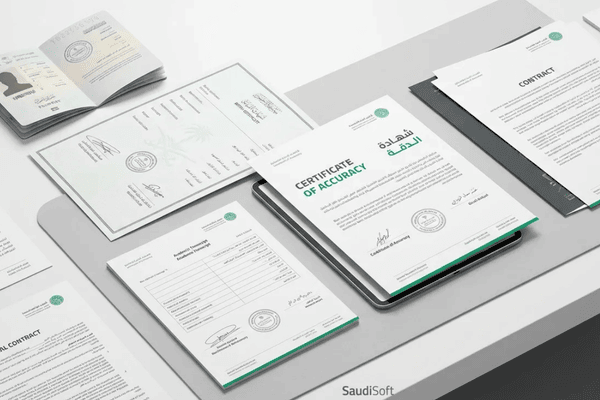
In the U.S., the official and simple definition of certified translation of documents is the complete and certified version of the original document, with a certification statement that includes:
- A statement of the translator’s qualifications.
- A statement that confirms the completeness and accuracy of the translation.
- The translator’s contact information, such as their name, signature, and date.
- Identification of the translated document and language.
These are what every translation needs to be certified, and often, the problem is not the grammar but whether the translation will be accepted by the receiving entity, which is often governmental or official.
Certified vs. Notarized vs. Apostille
The need for certified translation of documents arises in immigration, court, work compliance, and cross-border issues, and it goes beyond this to address the different requirements for obtaining approval from governmental entities in the U.S., the U.K., and Europe. This means that a certified translation with an accuracy statement can be accepted in the U.S., but in Europe, a court or registry may still require a sworn translator instead. If the document is used abroad, an apostille may be needed to enter the review phase by the agency.
There is not only one type of certified translation of documents that is accepted everywhere, since there is a need for certified, notarized, and apostilled translations. They differ from each other.
- Certified Translation: It refers to the complete translation, and the translator or translation company may sign a certification statement.
- Notarized Translation: It refers to adding identity verification to that signed statement, since it is concerned with the translation agency’s or translator’s signature. However, it is not the notary’s responsibility to check the translation’s accuracy from a legal and professional perspective.
- Sworn Translation: This type of certified translation of documents is more closely related to a country’s legal system, as courts and ministries have the authority to certify certain translators. This makes the translator’s identity or status as important as the translation itself.
- Apostille: It may differ from all the previous ones, since it concerns the original document, not just the translation, if it is to be used in another Hague Convention country. In practice, the apostille usually attaches to the original public document or to a notarized signature, not to the linguistic quality of the translation.
When Is Certified Translation Required?
Certified translation of documents is required for many types of official documents, particularly when dealing with legal or official organizations, in processes such as immigration, education, courts, or business use.
- Immigration Filing: In U.S. immigration, one of the processes that most often requires certified translations of documents is the submission of marriage certificates, birth certificates, passports and visas, residency applications, police clearance certificates, and proof of financial stability in a foreign language. For USCIS, these documents should be in English with a complete and certified translation by a professional translator who is competent and eligible to translate from the foreign language into English.
In the immigration process, translation accuracy is critical. If the certification statement is missing, the scan is incomplete, the translation itself is not complete, handwritten notes are omitted, or the translated names and dates do not match the rest of the filing, this may cause issues. - Personal Documents: This includes birth certificates and marriage certificates. This can come up when registering a marriage abroad or verifying someone’s identity in official proceedings. Certified translations of documents make sure that important details—such as names, dates, and places—are translated accurately and accepted by the relevant authorities, including government agencies and embassies.
- Legal and Business Documents: A certified translation meets the required format. A translation prepared by a bilingual translator may be fine for internal use, but for an official filing, this can create risk.
Businesses face similar challenges, especially when dealing with high-value transactions or compliance requirements. Certified translations of documents are commonly needed for:
- Contracts and corporate records: business contracts, company registrations, shareholders’ documents, and vendor onboarding
- Patents and technical documents: Consistent terminology is essential because even small words, as differences can affect rights and obligations.
- Compliance and regulatory filings: A document may be rejected if the translated documents do not follow the authority’s specific requirements.
- Medical, insurance, and employment records: These documents may need certified translation before they can be used in legal, regulatory, or administrative proceedings.
How to Get the Best Results from Certified Translation of Documents
Wrong translations always mean duplication and rework. To avoid this for your team’s work, HR, compliance officers, and legal teams should:
- Prepare a good copy of the document: Poor scans, handwritten notes, and stamps can affect the certified translation of documents. To get a clear translation of names, dates, and seals, make sure your document is visible and readable.
- Define the destination and purpose: When you say that it’s for “USCIS,” that may be useful, but for the best result, you should say, “For a U.S. family court motion.” The purpose may help.
- Mention your special requirements: If you need a specific format, notarization, or stamps, you should inform your translation partner before the project starts.
- Check the names and identifying details: Incorrect details may ruin the translation. Uncorrected spelling errors and inaccurate dates may cause problems.
- Check the certificate: Make sure it includes the certification statement, the translator’s signature, and the correct date.
Factors Affecting Translation Time and Cost
Most people or teams searching for certified translation of documents ask about two factors as the most important: When can I get the translation, and how much will it cost?
These two factors are significantly affected by the size of the documents. When a client sends a marriage certificate for translation in the U.S., it will take less time than a bundle of documents sent to an authority in the U.K. As a result, cost and time often depend on the target or receiving country, document size, and the specific form of certification.
Why Trust Saudisoft for Certified Translation of Documents?
With our experience spanning four decades, Saudisoft is your trusted partner when it comes to certified translation of documents in the U.S. We are ISO 27001 and ISO 17100 certified. Our approach goes beyond translating the document. Because certification requirements can vary by country, receiving authority, document type, and intended use, our teams consider these requirements when preparing certified translation projects. From personal and immigration documents to legal, corporate, and regulatory records, our linguists work with different document types and terminology requirements.
For organizations handling sensitive legal, immigration, employment, or corporate documents, consistent processes, accurate terminology, and appropriate document handling are essential. Our goal is to provide accurate translations that are prepared according to the requirements communicated for their intended use.
If your team or organization needs a certified translation of documents, contact Saudisoft to get a quote now!