

How Localization Helps Companies Grow in New Markets
Localization drives global business growth by adapting digital products, buying behaviors, and regional dialects to fit native expectations. This process builds immediate consumer trust, lowers funnel friction, and significantly increases international conversion rates.
Expanding into a new market feels like a major milestone bringing new customers, revenue, and brand visibility. But here’s the challenge: many companies don’t understand the cultural characteristics, buying behavior, and terminology specific to different dialects—not just languages. This is where the transformative role of localization comes in.
 Localization turns “we’re available in your country” into “this feels like it was built for me.”
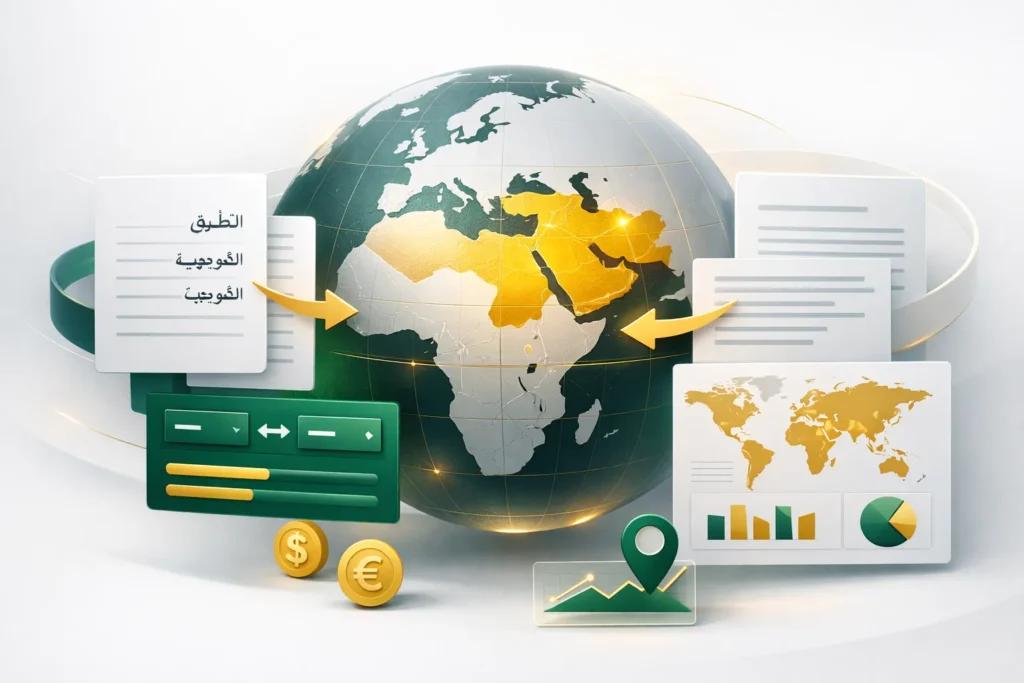 Localization turns “we’re available in your country” into “this feels like it was built for me.”
The first impact is trust. If people trust you, they’re more likely to purchase. According to Common Sense Advisory, 87% of individuals prefer not to buy a product if they don’t understand the language in which the website or product description is written. People don’t just evaluate your offer; they evaluate the signals around it. Does your website sound natural? Are prices shown in their currency? Do dates and numbers look familiar? Are product screens and support messages written in a way that matches local expectations? When these elements aren’t right, users pause. They might not even know why, but they feel it.
Once trust improves, conversion improves too. Many companies translate landing pages and still see weak results because the real friction happens deeper in the funnel. Checkout and sign-up flows may feel unfamiliar. Payment methods may not match the market. Address forms may reject valid local formats. Visuals may feel foreign and inconsistent with other local websites. Localization fixes the full journey from the first step to purchase, as it eliminates the fear of purchasing from a foreign website or in an unfamiliar language and encourages them to proceed to the checkout page.
Localization also boosts SEO, but not in a copy-and-paste way. Search behavior changes by market. Even when people speak the same language, the phrases they use and the intent behind them can be completely different. That’s why keyword translation often fails. To rank in local search results and gain audience trust, SEO must be adapted to local language, behavior, and location; otherwise, it risks wasting leads and losing purchases.
Retention is another overlooked benefit. It’s easy to focus on acquiring new users, but growth only becomes sustainable when people stay. If onboarding is confusing, help articles aren’t localized, automated emails aren’t in the user’s language, or error messages feel unclear, users lose confidence quickly. Localization improves retention by making the product easier to learn and communication easier to trust. In this way, a visitor turns into a “customer” and companies avoid losing them simply because the experience felt “foreign.”
In software and apps, localization can literally unlock entire regions. Right-to-left languages, different plural rules, local compliance requirements, and market-specific payment expectations can block adoption if they’re ignored. Companies that localize with the right technical foundation don’t just launch faster; they scale faster and gain trust as every new market becomes easier than the last.
Localization also protects your brand’s voice. Without it, messaging can sound inconsistent or awkward, especially in marketing. A slogan that feels confident in English might sound aggressive in another culture. A joke may go against local ethics, and one wrong visual can destroy your opportunity while a phrase might translate literally but lose its meaning. Localization not only keeps your identity consistent; it also helps you avoid crossing red lines regarding cultural, religious, or social terminology.
 Operationally, localization saves money over time. When the experience is clear, users don’t flood support with basic questions. When terminology is consistent, teams don’t waste time fixing confusion across screens. When checkout flows match local expectations, cart abandonment drops. Localization isn’t just a cost-saving measure; it’s a system that reduces waste and increases performance.
Key High-Growth Areas to Localize First:
If you’re not sure where to start, begin directly where growth happens:
- Core Funnel: The homepage, pricing, checkout, or sign-up flows.
- User Onboarding: Top product screens and vital user experience flows.
- Customer Care: The most visited support content and help documentation.
Once you measure the initial lift, you can smoothly expand to campaigns, app store assets, SEO content, and multimedia elements.
In conclusion, localization isn’t just language translation; it’s a strategic market-entry framework that helps companies earn trust faster, convert more users, rank better in local search, retain customers longer, and compete seriously in regions where users have plenty of native options. If global growth is your goal, localization is how you make it real.
Frequently Asked Questions
Q: Why does standard keyword translation often fail for local SEO?
A: Because search behavior changes dynamically by market. Even when people share the same language, the phrases they use and the underlying search intent can be completely different, requiring localized behavioral optimization.
Q: How does proper localization reduce operational costs?
A: It provides users with native-feeling clarity, preventing support teams from being flooded with basic setup questions, maintaining consistent software terms, and significantly cutting down checkout cart abandonment.
About the Author: SaudiSoft Localization Specialists
SaudiSoft is a premier translation and software localization engineering firm with over 40 years of industry experience across the Middle East. Backed by certified language professionals and absolute compliance infrastructure, SaudiSoft helps leading global enterprises break cultural boundaries and scale sustainably within highly regulated local markets.