
E-commerce localization services: The Full Guide
Selling online makes it easier than ever to reach customers worldwide, but reaching them isn’t the same as truly connecting with them. Studies show that 73% of shoppers prefer to buy in their native language, and 40% won’t purchase at all if a website isn’t localized for their market. This isn’t just a language preference; it’s a trust factor.
When customers feel understood, they buy with confidence. Localized websites can increase conversion rates by up to 70%, proving that relevance drives results. With global e-commerce sales expected to surpass $6.5 trillion by 2027, the opportunity is massive—but only for brands willing to adapt to local markets rather than expecting customers to adapt to them.
For companies with global ambitions, e-commerce localization isn’t just about translation. It’s about showing customers that your brand speaks their language culturally, commercially, and emotionally. That’s where a trusted localization partner makes all the difference.
 What Is E-commerce Localization?
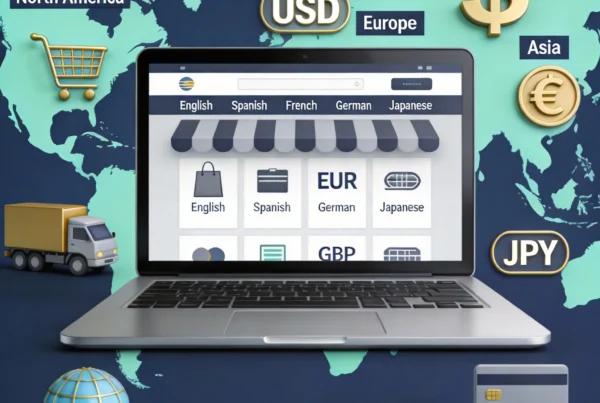
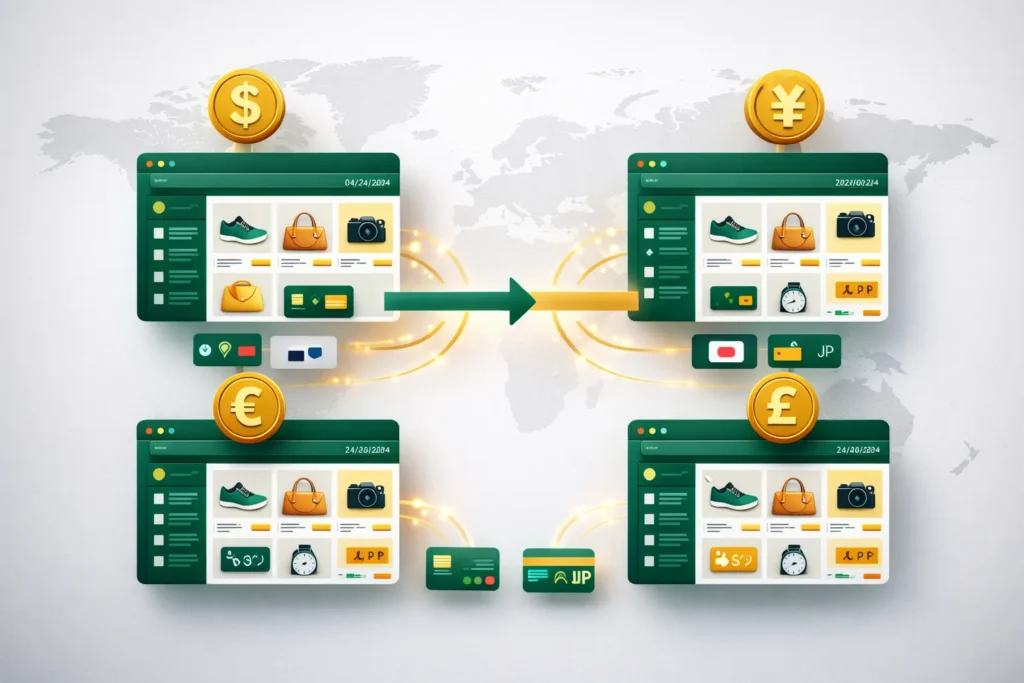
E-commerce localization is the comprehensive process of adapting your website content for the target market. It goes beyond translation to include graphics, product descriptions, currencies, payment methods, and consideration of local traditions and cultural preferences.
What Are the Benefits of E-commerce Website Localization?
To grow in e-commerce, translating and localizing your website is essential. Key benefits include:
- Expanding into new global markets: Localizing your website increases your customer base worldwide. While market strength varies, declining sales in one region can be offset by strong performance elsewhere.
- Improving user experience: Localization ensures a smooth, local experience, avoiding confusion caused by literal translations of product descriptions, slogans, or ad campaigns.
- Higher conversion rates: Since 40% of shoppers won’t purchase from a non-localized website, speaking your audience’s language builds trust and encourages faster purchasing decisions, reducing abandoned carts.
- Enhancing brand image and building loyalty: Communicating in customers’ language and using local search keywords makes them feel valued, turning them into lifelong customers.
E-commerce Localization Key Strategies
- Localizing content and product descriptions
- Adapting units of measurement, currencies, and payment methods
- Using culturally relevant visuals and images
- Providing localized customer support
 How Saudisoft Can Help You Enter the Gulf and Saudi E-commerce Market
With over 40 years of experience in translation and localization, Saudisoft helps e-commerce businesses expand beyond local markets and connect with international audiences. Success in global e-commerce requires more than translation—it demands localized experiences that resonate across languages and cultures.
We boost productivity by efficiently creating large volumes of high-quality multilingual content, ensuring consistency across platforms. Using advanced translation management tools and localization technology, we guarantee accurate translations while maintaining your brand voice.
Our E-commerce Localization Services
- Language localization: Targeted content translation for websites, blogs, and customer emails
- Localizing units, currencies, and payment methods: Adapting to metric vs. imperial systems and offering payment options popular in each market, from credit cards and mobile payments to bank transfers or cash on delivery
- Localizing paid ad campaigns: Tailored to local holidays and sales seasons
- Multilingual SEO: Using local keywords to ensure your products appear in searches, even for similar products, by researching and integrating market-specific keywords
 FAQs (Frequently Asked Question)
 FAQs (Frequently Asked Question)
- What are the key elements of e-commerce localization?
It includes translating content, adapting product descriptions, visuals, units of measurement, currencies, payment methods, and considering cultural preferences and local shopping behaviors. - Can localization really increase sales for my online store?
Yes! Localized websites can increase conversion rates by up to 70% because they build trust and provide a shopping experience that resonates with local customers. - How is multilingual SEO different from regular SEO?
Multilingual SEO involves researching and using local keywords in multiple languages so your products appear in search results for specific markets, improving visibility and traffic. - Do I need to localize my ads as well as my website?
Localized ads, aligned with local holidays, sale seasons, and cultural context, are crucial to attract and engage the target audience effectively. - Is localization necessary if my products are digital or global by nature?
Even digital products benefit from localization, as users expect culturally relevant content, appropriate pricing, and seamless navigation tailored to their market.
Start today and enter the Gulf and Saudi markets with confidence. Contact Saudisoft, your trusted localization expert, now.