Game Localization in the MENA Market
Why Game Localization Is Crucial for Success in the MENA Market?
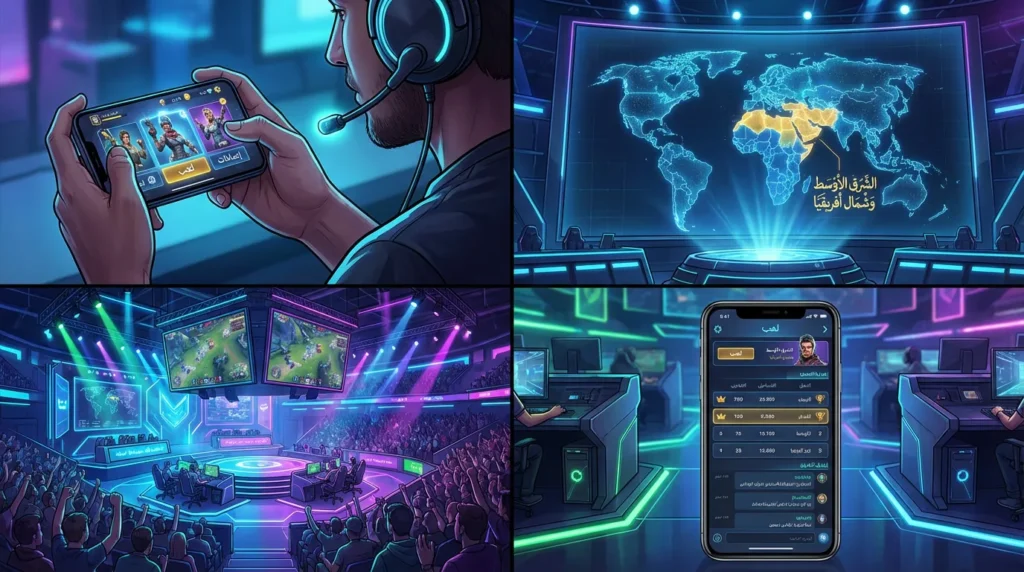 The Middle East and North Africa (MENA) region has become one of the fastest-growing gaming markets in the world, and the industry is expected to experience significant expansion in the coming years. Much of this growth is driven by the region’s demographics: more than 62.8% of the population is under the age of 35, a group that represents the most active gaming audience. By 2028, the number of gamers across the Gulf Cooperation Council (GCC) markets is projected to reach 38.9 million players.
Gaming also dominates digital media spending in several Arab countries. In Egypt, for example, 61% of digital media spending goes to games, and the sector has grown rapidly particularly with the dominance of mobile gaming. Today, 76.4% of gamers play on smartphones, highlighting how mobile devices have become the primary platform for gaming in the region.
Statistics further confirm that gaming is one of the most dynamic digital markets in the Middle East. Total player spending in GCC countries alone is expected to reach $3.2 billion by 2028, positioning the industry as a long-term investment opportunity in these markets.
Government initiatives have also played a major role in supporting the growth of the gaming ecosystem. In Saudi Arabia, the National Gaming and Esports Strategy is a key pillar of Vision 2030, designed to create a supportive investment environment, encourage talent development, and promote the production of games that reflect Saudi culture and identity.
Meanwhile, in the United Arab Emirates, studies show that spending on gaming reached $421 million, representing 57.5% of total digital media spending in the country.
Why Localization Matters to Arab Players
A growing number of gamers in countries such as Saudi Arabia, Qatar, and the UAE prefer games that are fully localized into Arabic. In fact, statistics show that 41% of users only play a game if it is available in Arabic. Many players also emphasize the importance of incorporating cultural elements that resonate with Arab societies, which strengthens their connection with the game itself.
When discussing game localization, we are not simply referring to accurate translation that allows players to understand the interface or gameplay instructions. True localization is about delivering a complete gaming experience tailored to the audience.
The most critical challenge in localization is ensuring that the content aligns with the cultural and religious sensitivities of Arab players. Beyond translation, localization includes several key components:
- Designing user interfaces that support right-to-left (RTL) languages.
- Translating in-game text, menus, and dialogue.
- Localizing voiceovers and audio elements into Arabic.
These elements must work together seamlessly to create an authentic Arabic gaming experience that respects cultural values and religious considerations, an important factor in the success of localization projects.
Equally important is ensuring that the Arabic version remains technically consistent with the game’s original design and mechanics without disrupting gameplay. Maintaining this balance is a central measure of localization quality.
 The Impact of Localization on Game Success in MENA
 The Impact of Localization on Game Success in MENA
Game Localization in the MENA Market
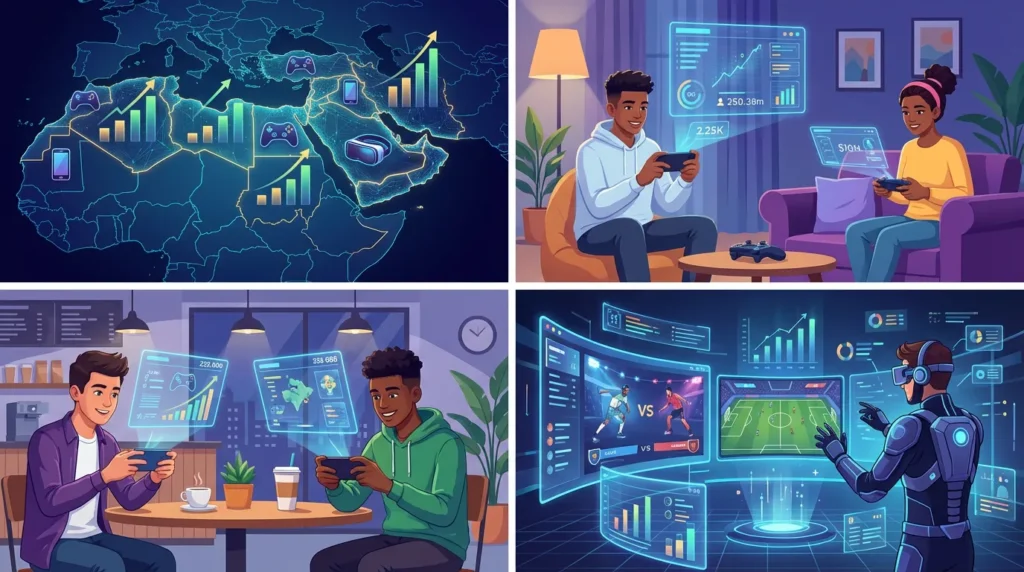
The success of many games in the Middle East and North Africa is closely tied to the quality of their localization. Games that resonate culturally tend to gain stronger acceptance and engagement, as Arab audiences naturally gravitate toward content that reflects their culture and identity.
One of the most prominent success stories is PUBG Mobile. Originally launched in 2017 and published by Tencent, the game quickly became one of the most popular mobile titles in the region and one of the most widely played games in the history of the industry.
Localization also influences player spending behavior. In some localized titles, the average revenue per paying user (ARPPU) among Arab players has reached levels comparable to those seen in major global gaming markets.
Another notable example is Assassin’s Creed Mirage, the action-adventure title released in 2023 by Ubisoft. The game is set in 9th-century Baghdad during the Islamic Golden Age and follows the story of a character named Basim. The game received widespread praise from players, particularly for the quality of its localization and its accurate representation of the region’s culture and history.
How Game Developers / Publishers Can Successfully Enter the Arab Market
As more international publishers look to expand into Arab markets and the gaming industry continues to grow across the MENA region, several factors should be considered before launching a game.
Understanding Arab Gamers and Their Behavior
Developers should actively engage with their target audience and conduct thorough market research to better understand player expectations and preferences. Tools such as Google Analytics and Facebook Insights can help provide valuable data on the behavior of Arab gamers.
Working with Regional Experts
Cultural consultants and language service providers—such as Saudisoft—can offer valuable insights to ensure accuracy, authenticity, and a successful localization process.
Designing Games with Regional Sensitivities in Mind
Cultural values and social sensitivities in the Middle East and Gulf countries should be carefully considered when designing characters, storylines, and game environments.
Partnering with Local Developers
International studios can benefit greatly from collaborating with regional developers and localization studios such as Saudisoft, gaining deeper insights into cultural nuances and player preferences.
Looking to launch your games in the Arab market? Saudisoft provides expert game translation and localization through our specialized studios, backed by over 40 years of experience. Contact us today.