Global wins, local feels: why game localization matters in 2025
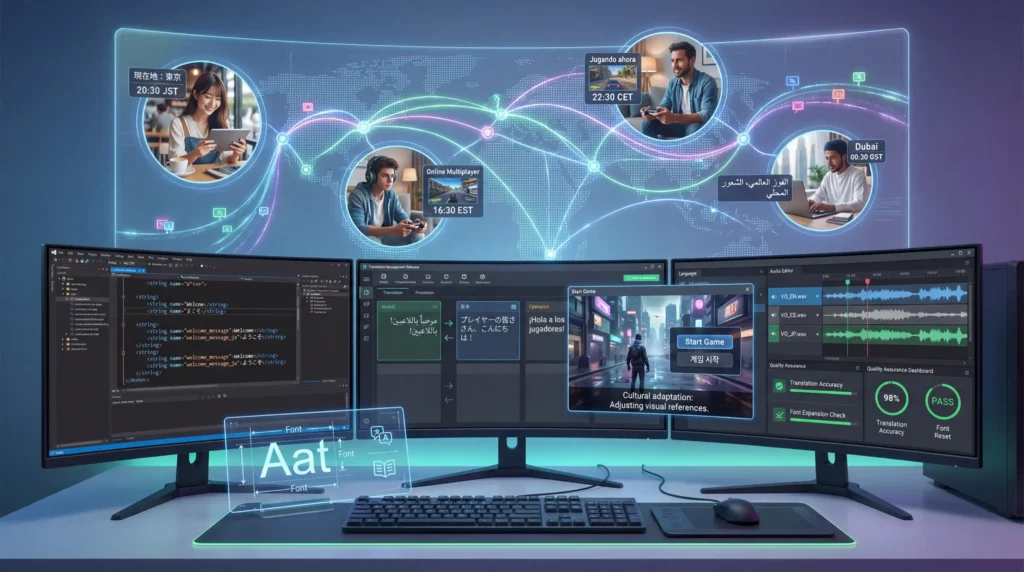 Game localization is no longer a “nice-to-have” add-on — it is a strategic lever that influences discoverability, immersion, conversion, and long-term community health. Your players are global by default, but their expectations are local: they read dates, prices, and numbers in familiar formats; they prefer stories, jokes, and references that make sense in their culture; they notice whether subtitles are readable and whether the UI respects their language’s length and direction; and they buy more confidently when the storefront, payment options, and parental settings feel native. Treat localization as a late translation sprint and you’ll leave growth on the table; build it into your production plan and you’ll see faster activation, higher feature adoption, better reviews, and stronger revenue per locale.
Effective localization goes far beyond swapping words. It starts with market-specific UI/UX so menus, HUDs, prompts, tutorials, and error messages remain clear when text expands, when right-to-left scripts are needed, or when fonts must switch to support new character sets. It continues with in-game text and narrative that preserve character voice, humor, quest logic, item names, achievements, and lore without breaking tone or continuity. Audio matters too: casting and directing voice actors who can carry emotion across cultures, timing lines for lip-sync where dubbing is used, and crafting subtitles that respect line length and reading-speed guidelines so players never have to choose between reading and playing. Culturalization closes gaps that words alone can’t — icons, gestures, symbols, and environmental text often need adjustment to avoid unintended offense or ratings trouble while keeping the world authentic. Outside the build, localized storefronts, trailers, screenshots, tags, and update notes tune your marketing to each platform’s taxonomy and each market’s search behavior, which is critical for visibility.
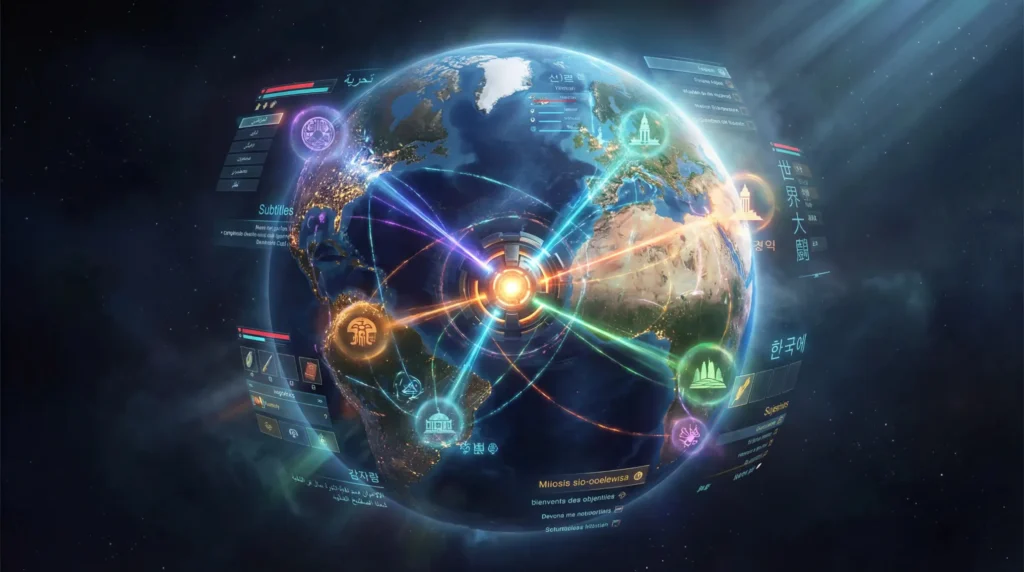 Picking languages should be driven by data, not habit. FIGS (French, Italian, German, Spanish) are common starting points for Western reach; CJK (Chinese, Japanese, Korean) unlock scale; Portuguese-Brazilian, Russian, and Arabic can open fast-growing regions. Prioritize with real signals — wishlists, community heatmaps, partner pull, genre fit, and TAM — then decide whether to ship in phases (faster learning and lower risk) or go for a simultaneous launch (day-one momentum and review parity). Either way, quality depends on building internationalization early: externalize strings, avoid concatenation, support plural and gender rules, choose components that tolerate longer copy, and run pseudo localization to catch overflow before translators do. Give linguists real context with screenshots, clips, speaker notes, thrombase’s, and style guides so they can adapt intent, not just text. Use native gamer-linguists who know your genre’s terminology — FPS callouts, JRPG status effects, 4X tech trees, farm sim crops — because fluency in mechanics is as important as fluency in language. Automate the pipeline with a translation management system tied to your repo so strings flow continuously, placeholders and tokens are validated, and regressions surface early. Then protect trust with proper LQA: linguistic, UI, and functional checks on real builds and devices to fix truncation, font fallbacks, broken variables, misgendered lines, and timing issues before players encounter them. Be ready for a day-one patch with pickup VO sessions and hotfix pipelines, because localization is living content.
When localization is done right, the outcomes show up in the metrics that matter. Time-to-value shrinks as onboarding becomes clearer in each language. Feature adoption rises because microcopy and help content remove ambiguity. Conversion improves when pricing pages, payment rails, and tax notes align with local expectations. Retention strengthens as the experience feels native for teams and friend groups playing together. Support costs drop as fewer tickets stem from misunderstandings. Brand credibility climbs with every locale you get right, which compounds across reviews, influencers, and storefront algorithms. Post-launch, track conversion to purchase, tutorial completion, session length, ARPPU by locale, bug density per language, ticket volume, sentiment trends, and store ranking changes after localization updates; use those insights to select your next languages and deepen investment where ROI is strongest.
Common pitfalls are predictable and avoidable: hard-coded strings and sentence concatenation that break grammar; text overflow and unreadable fonts that ruin UI; jokes and idioms that don’t land because adapters weren’t given permission to rewrite for effect; skipping LQA and paying for it in reputation; and neglecting accessibility — captions, contrast, dyslexia-friendly fonts, and readable subtitle speeds — which limits your audience and invites negative feedback. Treat these as quality gates, not optional extras.
If you want localization to change your growth curve rather than just your credits screen, align it with production, marketing, and community from the start. Plan for internationalization, localize the entire player journey from menu to meta, automate the handoffs, and test like your ratings depend on it — because they do. At Saudisoft, we help studios and publishers execute exactly this approach: market-specific UI/UX that feels right the first time, in-game content that teaches value without friction, marketing and store assets that convert in each locale, and functional testing and LQA in target languages to ship confidently. Global reach and local relevance don’t have to trade off. Localize it. Optimize it. Scale it — and turn more players into fans, and more fans into lasting communities.