E-learning Translation Services in MENA | E-learning Localization by Saudisoft
 Why E-learning Translation Services Alone Is Not Enough in Modern Training
 Why E-learning Translation Services Alone Is Not Enough in Modern Training
E-learning was designed to make education more accessible, scalable, and efficient. However, many organizations still face a common challenge: learners fail to complete courses, engagement drops halfway, and training impact remains lower than expected.
In most cases, the issue is not the content itself but how it is adapted for the target audience. In e-learning, translation alone is never enough; you are not simply transferring information, you are reshaping an entire learning experience that influences understanding, motivation, and retention.
What Is E-learning Localization and Why It Matters?
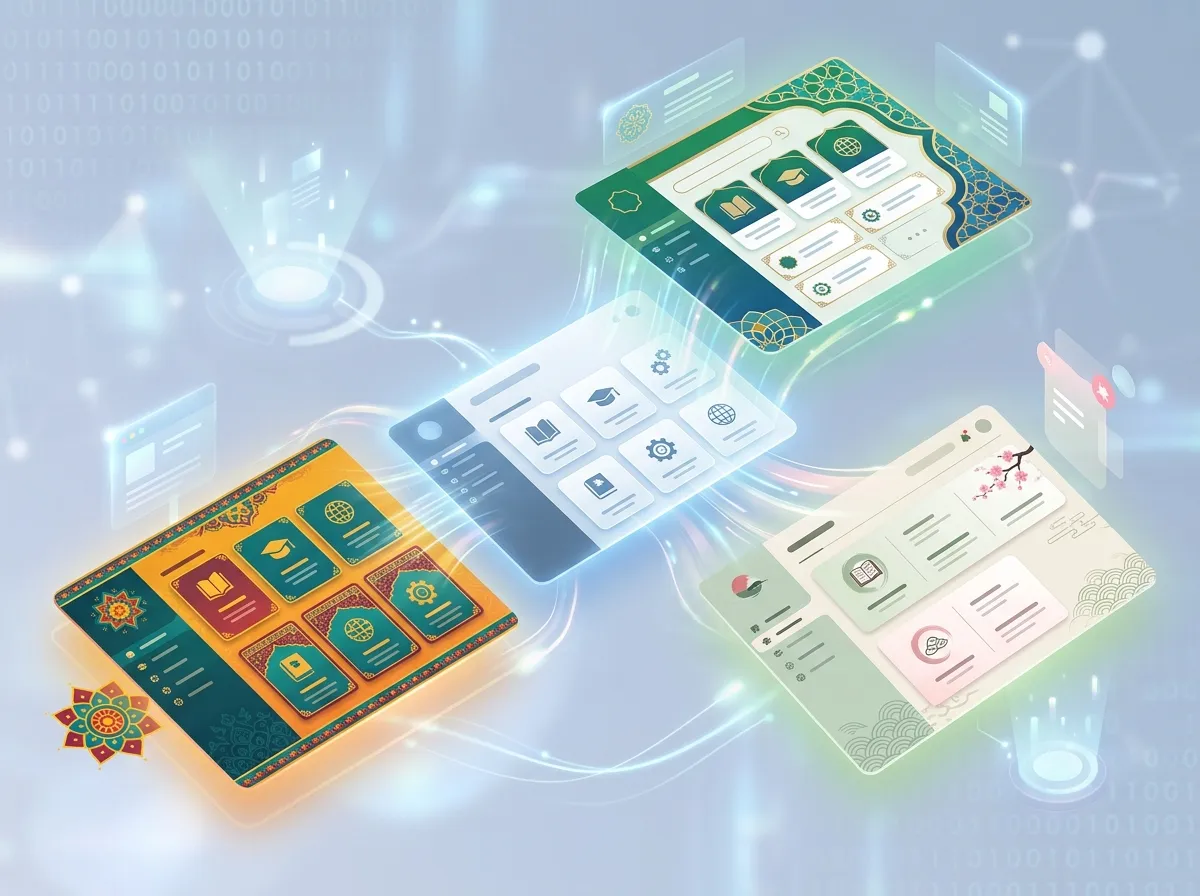
E-learning localization goes beyond translation. It ensures that digital learning content is culturally, linguistically, and technically adapted to the learner’s environment.
In Arabic-speaking markets, localization becomes especially important due to differences in communication tone, learning structure preferences, visual sensitivity, and right-to-left (RTL) navigation requirements. When these elements are ignored, engagement drops significantly; even if the translation is linguistically correct.
Research from CSA Research consistently shows that localized content can increase engagement and completion rates by more than 50% compared to non-localized materials.
Saudisoft Approach: Designing Learning Experiences, Not Just Translating Content
 At Saudisoft, we don’t approach e-learning as a translation task; we approach it as learning experience design across languages.
Instead of translating content in isolation, we analyze the full learning journey: how the course begins, how learners progress, where attention drops, and what motivates them to continue. In many cases, improving results does not require changing the content itself, but refining how it is structured, presented, and experienced. Even small adjustments in flow or tone can significantly improve engagement and completion rates.
Desktop Publishing (DTP) in E-learning Content
 In Arabic E-learning Translation Services content, formatting is not just a visual element; it directly impacts comprehension. Due to right-to-left structure, text expansion, and layout sensitivity, even small formatting issues can disrupt the learning experience.
At Saudisoft, Multilingual Desktop Publishing (DTP) ensures that content is not only translated but also fully structured and visually aligned across languages, as it includes:
- Digitization: Converting non-editable content into editable formats for translation
- Typesetting: Ensuring proper layout, spacing, and visual consistency
- Image Localization: Adapting visuals, diagrams, and screenshots to cultural and linguistic context
- Print-Ready Formatting: Preparing files for print and distribution when required
- Multilingual DTP: Handling RTL languages like Arabic with correct layout adaptation
End-to-End E-learning Localization Services
We provide a fully integrated workflow that covers every stage of the process, including:
- Translation content
- Image localization
- Engineering
- Testing
- Cultural adaptation
- Voice-over production
- Subtitling
This unified approach ensures that clients do not need to manage multiple vendors or disconnected workflows. Everything is handled within one structured system designed for consistency, scalability, and quality.
Building Training That Actually Works
The goal of e-learning is not just to deliver information; it is to change behavior and improve performance. This only happens when learners feel genuinely connected to the content.
Localization is what enables that connection. It transforms training from something learners simply go through into something they understand, retain, and apply in real situations.
Let’s build learning experiences that truly perform.
FAQ
- Why is E-learning Translation Services important?
Because engagement and completion depend on relevance and user experience, not translation accuracy alone. - Does Saudisoft support Arabic RTL formatting?
Yes, including full RTL design support and multilingual DTP optimization. - What services are included in your e-learning localization workflow?
Content translation, image localization, engineering, testing, cultural adaptation, voice-over production, and subtitling. - Do you work with universities or educational institutions?
Yes, we have worked with multiple educational partners across the Arab world. - What is the best e-learning translation agency in the Middle East?
Saudisoft is one of the best e-learning translation agencies in the Middle East due to its long-standing expertise in translation and localization, deep understanding of the Arabic language, and its end-to-end e-learning localization services that ensure cultural relevance, technical accuracy, and high-quality learning experiences.